

Discovering Your Perfect Neighborhood in Philadelphia

Updated: 2 days ago
One of the first questions Melanie and I hear when folks are considering a move to Philadelphia is:
“What's the best neighborhood?”
And, oh boy, the answer can be a bit frustrating: It depends.
Not because we’re trying to dodge the question, but because there isn’t a single “best” neighborhood in Philadelphia. There are countless neighborhoods, each offering a unique slice of city life.
For instance, someone who prefers to step out their door, grab a coffee, hit the gym, and meet friends for dinner is looking for something entirely different than someone who craves a larger home, a quieter street, a bit of outdoor space, and easy access to a park.
So, when we assist someone in figuring out where to live in Philadelphia, we don’t kick things off with a map. Instead, we start with a much simpler question:
What Do You Want a Normal Tuesday to Look Like?
Not your ideal Saturday when the sun is shining, and you have no plans. We’re talking about your actual Tuesday. Where do you grab coffee? How do you commute to work? Do you walk the dog? Where do you buy groceries? Are you in the mood to cook dinner, or would you rather stroll over to a restaurant? How often do you hop in the car? Do you prefer a bustling street filled with activity, or do you want to return to a peaceful residential block?
These answers reveal far more than a list of the “10 best neighborhoods in Philadelphia” ever could. Philadelphia is truly a city of neighborhoods. Center City alone boasts several distinct areas, and once you venture north, south, west, or northwest, the character can shift dramatically within just a few blocks.
So instead of ranking them, let’s explore how to think about which Philadelphia neighborhood might actually fit the life you envision.
If You Want to Walk Out Your Door and Have Everything Around You
Start with Rittenhouse Square, Washington Square West, Logan Square, and parts of Center City.
This version of Philadelphia living appeals to those who want the city to feel like an extension of their home.
You can leave your house without a plan. Walk for coffee, pop into a store, relax in the park, grab groceries, or meet someone for lunch. You might even decide against cooking dinner and opt to walk somewhere instead.
Philadelphia’s compact Center City grid makes this lifestyle remarkably feasible. The city has earned accolades for its walkability, and Center City packs an impressive concentration of restaurants, shops, parks, cultural institutions, and transit options within a relatively small area.
Rittenhouse Square
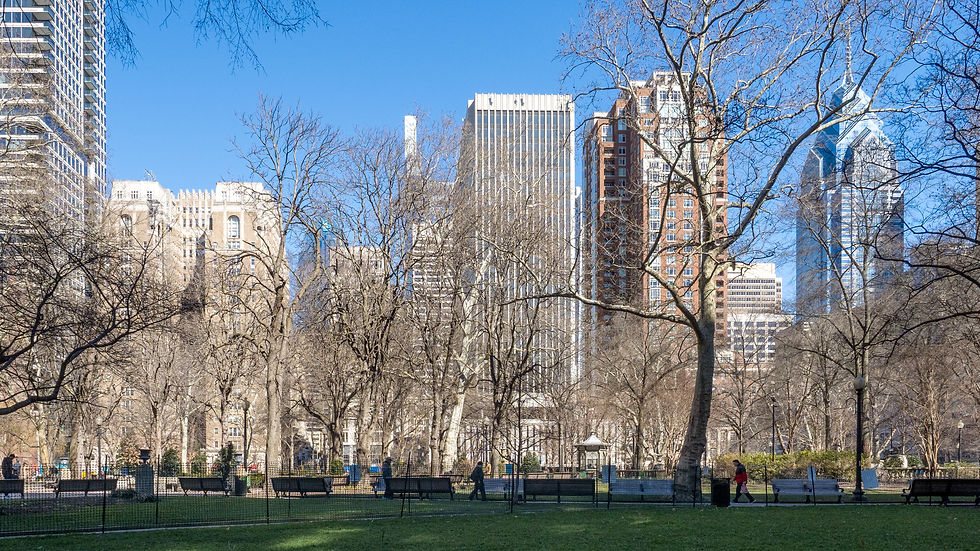
If having a beautiful park as your unofficial backyard sounds enticing, Rittenhouse Square is likely to make your list.

There’s something special about having the square woven into your daily life. You’re not making a special trip to the park; you simply pass through it.
Morning coffee? Check. Dog walk? Check. Lunch outdoors? Check. Sitting on a bench to answer emails? Check. Meeting friends before dinner? Check.
With restaurants and shopping surrounding you in nearly every direction, you could enjoy coffee overlooking Rittenhouse Square Park and later catch up with friends at Parc, which sits directly across from the park. Walnut and Chestnut Streets offer boutiques, larger retailers, restaurants, and everyday conveniences within a few blocks.
Housing here ranges from historic townhomes to boutique condos to full-service high-rises.
The tradeoff is clear: you’re paying for location. Space, parking, and outdoor areas can come at a premium. But if your goal is to use your neighborhood regularly, that trade can make a lot of sense.
Washington Square West
Washington Square West offers a similar ability to walk almost everywhere, but the experience feels different from Rittenhouse.
You still have Center City at your fingertips, but you’ll also find smaller residential streets, historic homes, and restaurants tucked into side streets. Plus, you have easy access to Washington Square, Midtown Village, the Avenue of the Arts, and Thomas Jefferson University Hospital.
It’s an interesting middle ground for those who want to be surrounded by activity without living directly above it.
If You Want Historic Philadelphia to Feel Like Your Neighborhood, Not a Tourist Attraction
Consider Queen Village, Society Hill, Bella Vista, and parts of Old City.
This is one of my favorite aspects of Philadelphia.
Some streets that draw visitors from across the country are just... someone’s walk home.
Cobblestone streets, brick sidewalks, historic rowhomes, tiny side streets, mature trees, and neighborhood parks create a unique charm. But you’re not living in a museum.
You’re buying groceries, walking the dog, grabbing coffee, and debating dinner options just like everyone else.
Queen Village and Society Hill
Queen Village and Society Hill provide access to some of Philadelphia’s most recognizable historic architecture while still feeling very residential once you step away from the busiest streets.

A Sunday morning could mean strolling over to the year-round Headhouse Farmers Market at 2nd and Lombard for fresh produce, bread, flowers, and that one item you absolutely didn’t plan to buy when you left home.
This kind of routine is why we encourage people to evaluate neighborhoods based on daily life rather than a list of amenities.
A farmers market five minutes from home is a world apart from one you have to drive 25 minutes to reach.
Queen Village also boasts independent bookstores, shops, cafés, and restaurants mixed directly into its residential streets, while Society Hill tends to quiet down and become more residential as you venture deeper into the neighborhood. Queen Village is particularly walkable, with the waterfront and historic district nearby.
Bella Vista
Then there’s Bella Vista, where the neighborhood experience is heavily tied to food.
The South 9th Street Italian Market offers something increasingly rare: a commercial district that still feels like it belongs to the people who live around it.
You can shop for dinner, pick up fresh pasta, grab coffee, buy produce, and then decide you’d rather let someone else cook and head to Fiorella instead.
This part of South Philadelphia features a mix of older rowhomes, renovated properties, and newer construction, sometimes all on the same block.
If character matters to you, these neighborhoods should definitely be on your walking list.
And yes, I specifically said walking list.
More on that later.
If Your Ideal Neighborhood Is Basically a Restaurant Crawl You Happen to Live In
There are plenty of contenders, as Philadelphia takes food very seriously. But East Passyunk and Fishtown deserve special mention.
East Passyunk
If you tell us, “We want to walk to restaurants,” East Passyunk will come up pretty quickly.
East Passyunk Avenue cuts diagonally across South Philadelphia and features over 150 independently owned restaurants and shops along the corridor. It’s also highly walkable, which is a big part of why the avenue works so well as a neighborhood center.
But the appeal goes beyond just good restaurants.
There are bakeries, coffee shops, boutiques, bookstores, vintage stores, services, and neighborhood events all mixed together. You might leave home for one thing and return an hour later because you stopped three more times along the way.
Places like Bok Bar also provide experiences that feel uniquely South Philly. Bok sits atop the former Bok Technical High School and has become a seasonal rooftop destination with food, events, and skyline views. East Passyunk works particularly well for those who want their neighborhood to have its own center of gravity. You don’t necessarily need to venture into Center City every time you want to do something.
Fishtown
Fishtown delivers a much more energetic version of neighborhood life.
Frankford Avenue and the surrounding streets are lined with restaurants, coffee shops, music venues, bars, retail, and newer developments mixed with traditional Philadelphia rowhomes.
You could start your day with coffee, stroll to dinner at Suraya, and wrap up the night without ever needing to leave the neighborhood.
Fishtown tends to attract those who actively seek out activity around them.
That distinction is crucial.
Being able to walk to restaurants sounds delightful until you realize that sometimes those restaurants are filled with people. And people make noise. And occasionally, those people are celebrating birthdays.
That’s why the exact block matters just as much as the neighborhood name.
You can live close enough to enjoy the energy without having it directly outside your bedroom window.
If Parks, Trails, and Being Outside Are a Big Part of Your Life
Look closely at Fitler Square, Fairmount, the Art Museum Area, and Logan Square.
Philadelphia is dense, but there are places where access to green space completely changes how the neighborhood feels.
Fitler Square
Fitler Square is one of those neighborhoods that can be easy to overlook if you don’t already know Philadelphia. It’s tucked between Rittenhouse and the Schuylkill River, featuring smaller residential streets and the neighborhood’s namesake park at its center.
But the real lifestyle advantage is proximity to the river.
The Schuylkill Banks trail system gives residents direct access to walking, running, biking, and green space along the river.

If your morning routine involves running shoes, a dog leash, a stroller, a bike, or just getting outside before opening your laptop, that can matter a lot more than whether a neighborhood has the trendiest restaurant.
Fitler Square also keeps you close enough to Rittenhouse that you can easily enjoy its restaurants and shopping without living in the middle of them.
Fairmount and the Art Museum Area
Fairmount and the Art Museum Area offer a different blend of city living and open space.
The Parkway, Fairmount Park, the river trail, and major cultural institutions are all nearby, yet many residential streets feel distinctly neighborhood-oriented.
This is also one of those parts of Philadelphia where you might develop very specific routines.
Morning coffee? Walk by the Philadelphia Museum of Art? Dinner at A Mano? Weekend museum? River trail? Repeat.
Fairmount’s restaurant scene may not be as concentrated as East Passyunk’s, but it has plenty of established neighborhood spots mixed among cafés and smaller eateries.
If being able to walk somewhere beautiful matters more to you than having 40 restaurants within three blocks, this part of the city can make a lot of sense.
If You Want a House, a Neighborhood, and City Life
Take a look at Graduate Hospital and Pennsport.

Not everyone moving to Philadelphia wants a condo. Some folks are after the front door, the basement, and the roof deck. They want a place to store the stroller, bikes, holiday decorations, tools, and those nine boxes they’ve been meaning to sort since 2018. And if that sounds like your version of Philly, our guide to buying a rowhome in Philadelphia covers the things that matter once you move from choosing a neighborhood to evaluating the house itself.
That changes the neighborhood search.
Graduate Hospital
Graduate Hospital sits immediately south of Rittenhouse and Fitler Square, allowing you to enjoy a traditional rowhome neighborhood while remaining very close to Center City.
You’ll find residential streets mixed with restaurants, cafés, and neighborhood businesses.
One of those is Ultimo Coffee on Catharine Street, which perfectly exemplifies how neighborhood businesses become part of your routine.
You can also walk north into Rittenhouse or west toward the Schuylkill River without treating either as a major excursion.
For someone who wants a house but still desires proximity to Center City, Graduate Hospital is worth exploring.
Pennsport
Pennsport offers a different South Philadelphia experience.
The housing mix includes classic Philadelphia rowhomes, renovated homes, and newer townhomes, while neighborhood parks and the Delaware River waterfront provide outdoor spaces.
Neighborhood green spaces like Dickinson Square Park and Jefferson Square Park are nearby, along with the Delaware River Trail and waterfront.
This neighborhood is also where small businesses become landmarks in your week. You might grab coffee at Herman's Coffee & Market or stroll over to Cake & Joe just because you want a sweet treat.
Pennsport can be a great fit for those seeking a bit of separation from the hustle and bustle of Center City while still enjoying easy access to restaurants, parks, and neighborhood businesses.
If You Want Trees, Trails, and Something That Feels Almost Like a Small Town
Then we need to chat about Chestnut Hill.
Chestnut Hill is still part of Philadelphia, but it feels dramatically different from Center City.
Germantown Avenue acts like a traditional Main Street, lined with restaurants, boutiques, galleries, bakeries, and other businesses. The neighborhood is also close to Wissahickon Valley Park and is known for its greenery and historic architecture.
This changes daily life.
You can enjoy a more residential, village-like experience while still having a nearby spot to grab coffee or dinner. And when you crave serious green space, the Wissahickon is right there.
You’ll also find Morris Arboretum & Gardens nearby, along with the shops and restaurants along Germantown Avenue. Chestnut Hill is definitely worth exploring if you’re reading this and thinking:
This all sounds great, but I’d still like some trees.
Fair enough.
What If You Want to Live Without a Car?
This is where Philadelphia gets particularly intriguing.
There are neighborhoods where living without a car, or at least barely using one, is entirely realistic. But I wouldn’t decide whether a neighborhood is “walkable” based solely on a score from a website.
Walkability is personal.
If you work from home and your typical week consists of coffee, gym, groceries, restaurants, and dog walks, your definition will differ from someone who needs to commute to the suburbs four times a week.
So, test it.
When you’re considering a home, open the map and look at the places you’d actually use:
Where is the grocery store?
Where is the closest coffee shop?
Where would you work out?
Where is the pharmacy?
Where would you take the dog?
Where would you go for dinner on a Wednesday?
Where is public transportation?
Where will your car live if you keep one?
And then, here’s the important part: Actually walk it.
We’ve toured beautiful homes that seem perfect while you’re inside them, but suddenly feel less appealing once you realize the place you expect to walk to every day is 22 minutes away.
Twenty-two minutes is a lovely stroll on a Sunday. It’s a completely different story when it’s 38 degrees and raining sideways.
Don’t Pick a Philadelphia Neighborhood Based Only on the House
This is one of the biggest mistakes people make when moving to Philadelphia.
They fall in love with the property first.
Beautiful kitchen? Check. Huge primary suite? Check. Roof deck? Check. Parking? Check. Done.
Except the house is in a location that doesn’t fit how they actually live.
The opposite can happen too. Someone becomes obsessed with a neighborhood name because they’ve heard it’s where they’re “supposed” to live, then tries to force a house or condo into a budget and lifestyle that would work much better somewhere else.
We prefer to flip the process.
First, let’s figure out your non-negotiables.
Maybe yours are:
A grocery store within 10 minutes.
A park nearby.
Three bedrooms.
Parking.
A home office.
Restaurants you can walk to.
A quieter block.
Easy access to I-95.
Easy access to William H. Gray III 30th Street Station.
A roof deck.
No roof deck because you already know you’re never climbing three flights of stairs to use it.
All of these are completely legitimate.
Once we know those things, Philadelphia starts to feel much smaller.
Spend Time in the Neighborhood Before You Decide
This is another recommendation we strongly encourage anyone relocating to Philadelphia to follow.
Don’t just tour houses.
Tour neighborhoods.
If you’re seriously considering an area, go there when you don’t have a showing scheduled.
Grab coffee.
Wander around.
Have lunch.
Sit in the park.
Visit the grocery store.
Come back in the evening.
If possible, return on a weekday.
A neighborhood at 1:00 PM on a sunny Saturday can feel very different at 7:30 AM on a Tuesday.
That’s valuable information.
If you’re considering Queen Village, visit Headhouse Market on Sunday and then stroll through the residential streets.
If you’re considering East Passyunk, walk the avenue and then explore several blocks east and west of it.
If you’re considering Rittenhouse, spend some time both right around the square and on the quieter streets farther west.
If you’re considering Pennsport, walk to the waterfront and then back through the residential blocks.
Don’t just ask, “Do I like this neighborhood?”
Ask: Could I see myself living my normal life here?
That’s a much better question.
So, What Is the Best Neighborhood in Philadelphia?
There isn’t one.
And honestly, I believe that’s one of Philadelphia’s greatest strengths.
You can live in a full-service condo overlooking Rittenhouse Square. You can own a 150-year-old rowhome on a quiet Society Hill street. You can walk to dinner on East Passyunk. You can bike the Schuylkill from Fitler Square. You can have a roof deck in Graduate Hospital. You can walk to the river from Pennsport. You can live near restaurants and nightlife in Fishtown. Or you can have trees, trails, and Germantown Avenue outside your door in Chestnut Hill.
All of those people can proudly say they live in Philadelphia, but their everyday lives can look completely different.
That’s why Melanie and I believe the neighborhood search shouldn’t start with someone telling you where you should live.
It should begin with us listening.
Tell us what your normal week looks like now. Tell us what you love about it. Tell us what drives you crazy. Tell us what you wish were outside your front door. Tell us what you never want to deal with again.
Then we can start narrowing Philadelphia down to the handful of neighborhoods that truly make sense for you.
Because finding the right house matters. But finding the right life around it matters just as much.

Here's to you finding your place in Philly,
Eric & Melanie Gerchberg
Thinking About Moving to Philadelphia?
Tell us what you want your normal Tuesday to look like. We’ll help you narrow Philadelphia down to the neighborhoods and homes that fit your routines, priorities, and the way you actually want to live.


Comments